
Estimated Read Time: 5 minutes
Table of Contents
- What Is Gosht Champaran?
- Why the Handi Cooking Method Matters
- How We Serve Gosht Champaran at Gulaabo Ji
- What to Pair With Gosht Champaran
- When to Order Gosht Champaran at Gulaabo Ji
- What Else to Order With It
- Why Visit Gulaabo Ji for North Indian Food Near Anjuna
- Frequently Asked Questions
Key Takeaways
- Gosht Champaran is a slow-cooked mutton dish associated with Champaran in Bihar.
- The dish is traditionally cooked in a sealed handi, allowing the mutton to cook in its own juices.
- At Gulaabo Ji, we prepare our Gosht Champaran with mutton, onions, garlic, chopped ginger, whole spices, and mustard oil.
- Litti Chokha is the most regional pairing, while Rumali Roti, Dehati Roti, and Malabar Parotta each change the mood of the meal.
- For diners looking for the best North Indian food in Goa, Gulaabo Ji brings regional dishes into a warm, nostalgic Assagao setting.
What Is Gosht Champaran?
Gosht Champaran is not just another mutton curry.
It comes from the Champaran region of Bihar and is also known as Champaran Mutton, Ahuna Mutton, Handi Meat, or Batlohi. The names may change, but the spirit of the dish remains the same: bone-in mutton, mustard oil, onions, garlic, whole spices, and slow heat doing the work patiently.
Champaran itself holds a larger place in Indian memory because Gandhi’s first Satyagraha began there in 1917. The dish is not directly connected to that movement, but it belongs to a region with a strong identity, and the food reflects that groundedness.
We love Gosht Champaran because it is not built around cream, garnish or restaurant drama. It is patient food. The kind that asks for time, sealed heat and restraint. When done well, the flavour does not sit only on the surface. It travels into the meat.
At Gulaabo Ji, we keep this dish on our menu because it says something important about the food we believe in. North Indian cooking is not one single style. It is full of regions, memories, cooking vessels, spices and family-style techniques that deserve to be served with care.
Why the Handi Cooking Method Matters
The handi is not a prop.
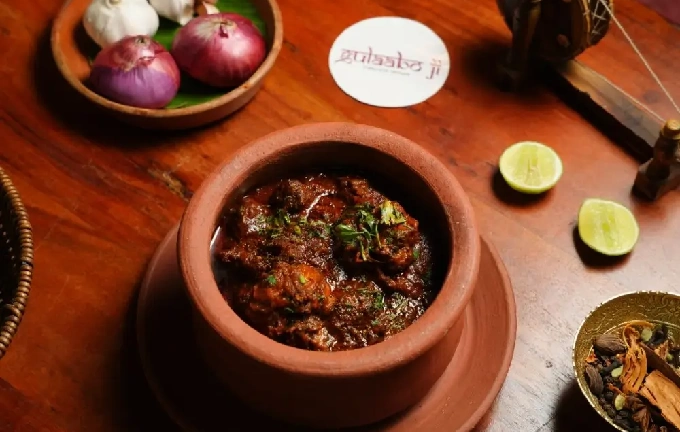
In Gosht Champaran, the vessel is part of the flavour. Traditionally, the mutton is placed in a clay handi with mustard oil, onions, garlic, ginger and spices. The pot is sealed, so the steam stays trapped inside. No extra water is added. The meat cooks slowly in its own juices.
That method changes the dish completely.
The garlic softens. The onions melt. The mustard oil gives the mutton its sharp, earthy depth. The bone adds body. The sealed steam keeps the meat moist without watering down the flavour.
This is why slow cooking matters here. It is not a phrase we use to make the dish sound premium. It is the reason the mutton becomes tender and full all the way through.
Many mutton dishes rely on heavy gravies or layered masalas. Gosht Champaran works differently. It requires fewer ingredients to do more work. If the meat is rushed or the pot is treated like a shortcut, the dish loses its character immediately.
That is what makes it different from a regular mutton curry.
How We Serve Gosht Champaran at Gulaabo Ji
At Gulaabo Ji, we treat Gosht Champaran as a slow-cooked handi preparation, not as just another mutton item.
We cook the mutton with onions, garlic, chopped ginger, whole spices and mustard oil, allowing the dish to build flavour through time and heat. The result is rich without becoming heavy, bold without becoming careless, and rustic without feeling unfinished.
This is the kind of dish that belongs on our Assagao table.
Many guests come to this side of North Goa for cafés, cocktails, coastal meals and late evenings. But not every meal here needs to be beach-led or fusion-led. Sometimes the table wants something warmer. Something rooted. Something that feels like it has travelled from another part of India with its character intact.
Among North Indian restaurants in Goa, we want Gulaabo Ji to stand for that kind of meal. We do not treat North Indian food as one broad, generic cuisine. A Lucknow-style kebab, a Bengal-influenced mutton dish, a Bihari handi preparation and a familiar butter chicken do not belong to the same mood.
Gosht Champaran earns its place because it gives diners a regional mutton experience that is still uncommon to find thoughtfully done in Goa.
Explore the Gulaabo Ji food menu to see how this dish sits alongside our other slow-cooked and regional favourites.
What to Pair With Gosht Champaran
The right pairing changes the meal.
If you are ordering Gosht Champaran for the first time, we would suggest pairing it with Litti Chokha. It is the most characterful choice. The sattu-filled litti, aloo-baingan chokha and tomato chutney bring the dish closer to its Bihari roots. The mutton gives depth. The litti gives earthiness and bite.
Rumali Roti works if you want something soft and light. It lets the mutton remain the centre of the meal without adding too much weight.
Dehati Roti gives the plate a more rustic North Indian feel. It is the better choice if you enjoy a fuller, homestyle meal and want the bread to hold its own against the mutton.
Malabar Parotta is not the most traditional pairing, but it works beautifully for diners who want something flaky, richer and more indulgent. It picks up the juices well and suits tables where everyone is sharing.
Our suggestion is simple. Choose Litti Chokha if you want the most regional experience. Choose Rumali Roti or Dehati Roti if you want comfort and balance. Choose Malabar Parotta if the table is in an indulgent mood.
This is not a dish to rush through. It is better ordered for the table, shared slowly and eaten while it is still warm from the handi.
When to Order Gosht Champaran at Gulaabo Ji
Gosht Champaran works best when the table wants a proper meal, not a quick snack.
Order it for lunch when you want something slow and full without making the meal too heavy. Order it for dinner when the table is ready to settle in, share breads, add a kebab or two, and let the conversation stretch.
It also works well for groups where at least one person wants to move beyond the usual butter chicken, dal and naan order.
If you are visiting us from Anjuna, Vagator, Siolim, Mapusa, or Assagao, plan Gosht Champaran as the centre of the meal. It is not a side dish. It deserves the right bread, enough time and a table willing to share.
For guests searching for North Indian restaurants near Anjuna, Goa, this is the kind of dish worth planning the meal around. It gives you a reason to come in, sit down properly and experience North Indian food beyond the standard restaurant routine.
What Else to Order With It
Gosht Champaran can be the reason you visit, but it does not have to be the only dish on the table.
If you enjoy soft, delicate kebabs, start with Kakori Kebab. It brings a very different kind of patience to the meal, built around texture, tenderness and careful spicing.
Mutton Dak Bungalow is a good second mutton dish if the table wants another preparation with history. It brings a colonial-era Bengal influence, with mutton, mustard oil, potatoes and boiled eggs moving in a more comforting direction.
Gulaabo’s Butter Chicken is for the guest who wants familiarity. It is rich, smooth and easy to enjoy, especially if the rest of the order leans deeper and more regional.
Litti Chokha should not be treated only as a pairing. It has enough character to be ordered as part of the meal in its own right.
This is where our menu becomes useful for groups. Not everyone at the table may want the same intensity. One person may come for Champaran mutton. Another may prefer butter chicken. Someone may want kebabs. Someone else may want a vegetarian or lighter option.
A good North Indian meal in Goa should allow all of that without losing its centre.
Why Visit Gulaabo Ji for North Indian Food Near Anjuna
We are set in Assagao, close to Anjuna, Vagator, Siolim and Mapusa. That makes Gulaabo Ji convenient for diners exploring North Goa who want something beyond the usual beachside meal.
If you are spending the afternoon around Anjuna or Vagator, coming into Assagao for dinner gives the evening a different direction. The mood is warmer, more nostalgic and built for conversation. The meal can slow down without feeling formal.
That is why we want Gulaabo Ji to stand apart among the best North Indian restaurants in Goa. Our menu is not trying to cover every possible dish from the north. It brings together dishes with personality: regional mutton, kebabs, gravies, breads, cocktails and comfort food that suit a relaxed table.
Gosht Champaran is a good example of that approach.
It is not the easiest dish to execute well. It does not depend on cream or garnish to impress quickly. It needs patience, the right balance of mustard oil and spice, and a willingness to let the mutton speak for itself.
That is why guests who enjoy serious North Indian food should order it at least once.
Experience Gosht Champaran at Gulaabo Ji
Some dishes do not need to shout to be remembered.
Gosht Champaran is one of them. It comes sealed, slow-cooked and full of flavour that cannot be rushed into existence. It is built from mustard oil, mutton, garlic, onions, heat and time.
At Gulaabo Ji, we serve it to diners who want North Indian food with more depth than the usual order. Pair it with Litti Chokha if you want the full regional experience, or choose your bread based on the kind of meal you want the table to have.
Visit Gulaabo Ji in Assagao and discover a slower, richer side of North Indian food in Goa.
What Guests Say
⭐⭐⭐⭐⭐
Lunch | ₹400–600
"I ordered Veg soya keema, Kosha Chicken, Lachcha paratha and Butter naan from this place after checking online reviews. And, to my surprise everything was so delicious! Especially, the soya keema was superb! I would definitely recommend Gulabo ji for the food! Since we didn't dine-in, I am not sure about how quick the service is but I was told that the order would be ready in 20 mins, which is good. There's free parking available and the ambience was decent."
Yavnika Negi, Google Reviews
Date : 24-08-2026